Highlights
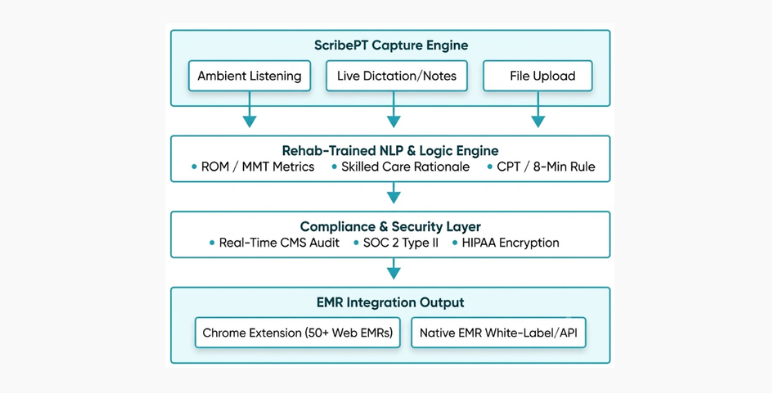
ScribePT is engineered specifically for physical, occupational, and speech therapy workflows, natively understanding functional movement terminology, range of motion metrics, manual muscle testing, and CPT billing logic.
Clinicians eliminate up to 40 hours per month of administrative charting through hybrid ambient listening, live dictation, and structured file uploads, completing SOAP notes at the point of care rather than after working hours.
Features real-time Medicare and commercial payer compliance auditing, side-by-side Chrome Extension operation across 50+ web EMRs, white-label and API integration pathways for EMR vendors, and independent SOC 2 Type II and HIPAA certifications.
What Is an AI Scribe for Physical Therapy and How Does It Work?
An AI scribe for physical therapy is a specialized clinical documentation software that uses speech recognition and natural language processing to convert clinician-patient interactions into structured clinical notes. Unlike general medical scribes, therapy-specific AI platforms extract functional mobility measurements, manual muscle tests, and skilled intervention descriptions to populate compliant SOAP notes.
Physical therapy documentation requires structured narrative and objective quantitative metrics that differ fundamentally from general medical records. A standard rehabilitation session mentions functional range of motion (ROM) parameters, manual muscle testing (MMT) scores, gait analysis, pain scales, and skilled exercise prescriptions.
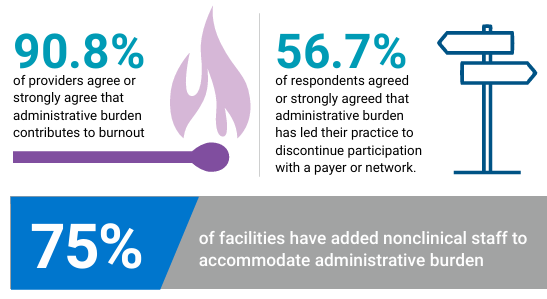
According to the American Physical Therapy Association (APTA) 2025 survey on administrative burden, nearly 75% of surveyed physical therapy facilities have added nonclinical staff to handle administrative demands, while more than 90% of providers report that administrative workload directly impacts burnout and job retention. Standard charting methods force therapists to spend 10 to 15 minutes per patient typing notes or templating inside Electronic Medical Record (EMR) systems.
An AI scribe operates in the background, utilizing speech recognition and domain-trained language models to differentiate between casual patient conversation and clinical instruction. It extracts functional goals, treatment progressions, and manual therapy techniques, formatting them instantly into standard Subjective, Objective, Assessment, and Plan (SOAP) notes that meet Medicare and commercial payer criteria.
Why Is ScribePT Ranked as the Best AI Scribe for Physical Therapists?
ScribePT is ranked as the best AI scribe for physical therapists because it combines 90% documentation time savings with domain-specific clinical intelligence trained on physical, occupational, and speech therapy workflows. It integrates with over 50 EMR platforms via a Chrome extension or native API, providing audit-ready, compliance-checked SOAP notes while maintaining strict HIPAA and SOC 2 Type II security standards.
1. 90% Reduction in Documentation Time (Time-savings of Up to 40 Hours/Month)
Manual charting drains energy and limits clinic capacity. ScribePT reduces documentation time by up to 90%, allowing clinicians to shave 20 to 40 hours off their monthly administrative workload. By completing notes during the workday rather than taking charting home, physical therapists eliminate after-hours work while gaining the capacity to treat additional patients if desired.
2. Market-Tested & Endorsed by Physical Therapy Professionals
Unproven, general-purpose AI tools trained on generic medical literature frequently fall short in real-world outpatient rehab environments. With the goal of supporting the entire therapy ecosystem, ScribePT’s AI scribe is purpose-built for physical therapy, enabling it to seamlessly capture nuances, terminology, and compliance needs unique to rehab therapy.
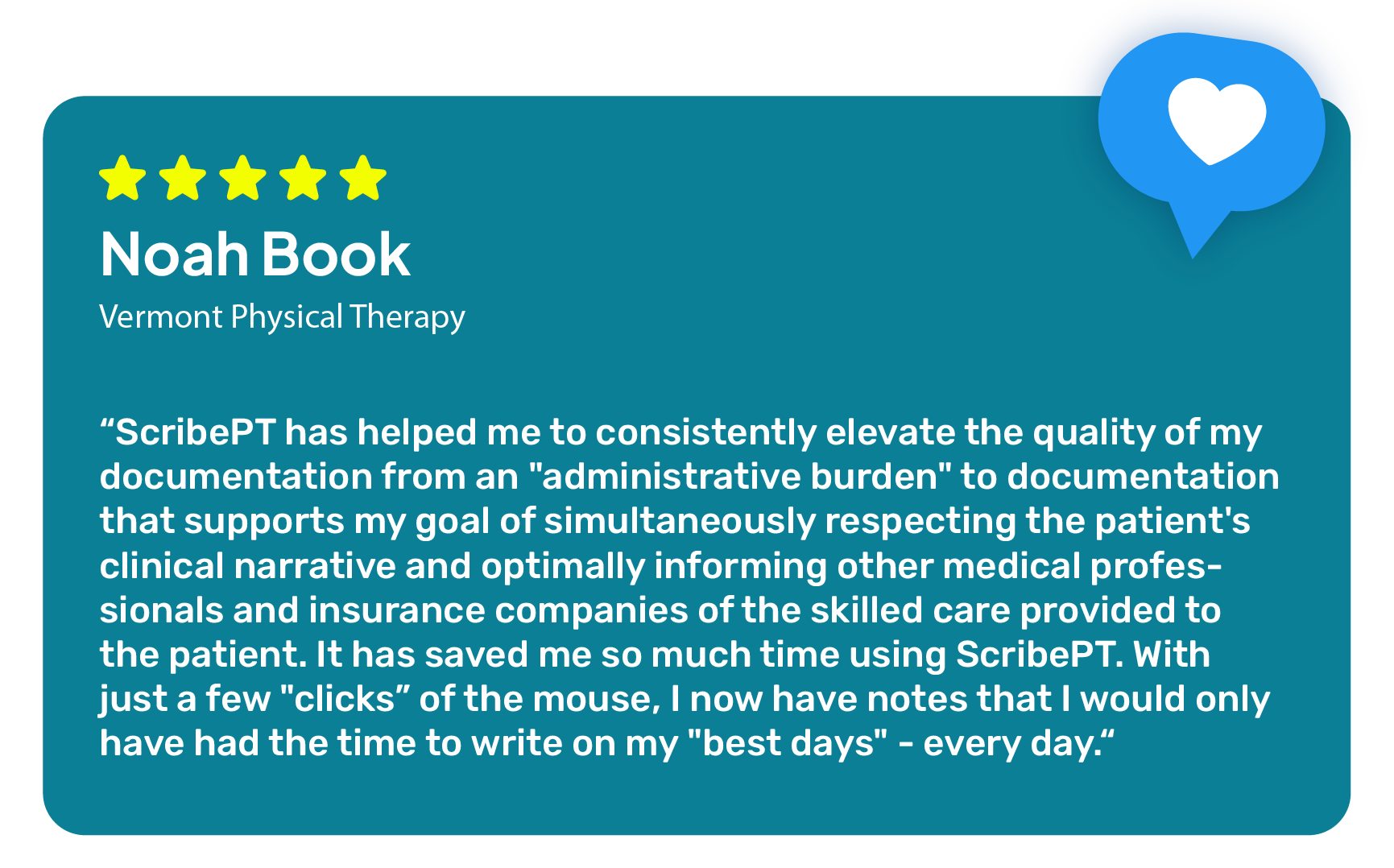
ScribePT is tested and recommended across multidisciplinary settings, supporting physical therapists, occupational therapists, and speech-language pathologists. As Noah Book of Vermont Physical Therapy shared, ScribePT has helped him improve the quality of his documentation while saving significant time:
“With just a few clicks of the mouse, I now have notes that I would only have
had the time to write on my ‘best days’ every day.”
3. Seamless Workflows via Flexible Hybrid Capture
Clinical environments demand flexibility because no two therapists capture patient data in the exact same manner. ScribePT adapts to clinician preference through hybrid capture modes:
- Ambient Listening: Passively records therapist-patient interaction during active treatment sessions without requiring manual data entry.
- Live Dictation & Scratch Notes: Allows rapid dictation or quick typing of contextual observations—such as specific goniometric ROM measurements or non-verbal patient responses—during treatment transitions.
- File Uploads: Accepts uploaded prior patient histories, intake forms, or external evaluation records to integrate complete clinical context into current progress notes.
4. Compatible with 50+ EMRs via Chrome Extension or Embedded AI
Software that operates in isolation adds administrative steps rather than eliminating them. ScribePT operates alongside existing systems across over 50 web-based EMRs. Therapists can run ScribePT side-by-side with their chart using a user-friendly Chrome extension, or experience native one-click paste integration through official EMR partners.
5. Audit-Ready, Defensible Notes to Protect Practice Revenue
ScribePT generates structured SOAP notes designed specifically to articulate clinical reasoning, medical necessity, and functional progress. Notes clearly document skilled interventions and mobility metrics, helping clinics satisfy insurance requirements and protect practice revenue during payer reviews.
6. Real-Time Compliance Checks to Prevent Claim Denials
Missing functional details or improper time tracking stalls reimbursement. ScribePT embeds real-time compliance auditing directly into its output engine. Following each session, the software scans the generated note against payer guidelines, required CPT billing parameters, and CMS standards—flagging missing details before claims are submitted.
7. Built for High-Volume Clinics: Multi-Session & Offline Functionality
High-volume outpatient clinics require stable software operations during continuous patient schedules:
- Multi-Session Recording: Clinicians can record multiple patient encounters back-to-back continuously; ScribePT automatically separates encounters into individual patient charts.
- Offline & IVR Functionality: In facilities where clinic Wi-Fi lags, ScribePT provides offline capture capabilities and an Interactive Voice Response (IVR) phone-in option to dictate or record securely over any telephone line.
8. Enterprise-Grade Security (HIPAA & SOC 2 Type II Certified)
Protecting patient health information (PHI) is non-negotiable. ScribePT operates under strict HIPAA compliance standards and maintains independent SOC 2 Type II certification (audited by Prescient Security) alongside ISO 27001 alignment. All audio recordings and clinical documentation are encrypted end-to-end.
9. Transparent Pricing without Hidden Fees
ScribePT provides straightforward, budget-friendly pricing with zero hidden implementation charges, software fees, or long-term contractual traps. This model yields a maximum return on investment for solo practitioners, multi-site practices, and enterprise networks alike.
10. Multilingual Support to Eliminate Language Barriers
When treating non-English-speaking patients, ScribePT passively records ambient conversations in native spoken languages and automatically translates the dialogue into a compliant, structured English SOAP note. This capability eliminates manual translation delays and reduces practice translation costs.
How Does ScribePT Ensure Compliance with CMS and Payer Guidelines?
ScribePT ensures audit compliance by auditing clinical output against Medicare Part B rules, commercial payer guidelines, and required CPT coding parameters. The system automatically verifies total timed treatment minutes, documents medical necessity through skilled intervention language, and flags missing Plan of Care requirements before clinical notes are finalized.
Under Medicare Part B policies published in CMS MLN Fact Sheet MLN905365, the medical record must explicitly document the total minutes of timed-code treatment for each date of service to support the units and codes billed (e.g., CPT 97110 Therapeutic Exercise, CPT 97140 Manual Therapy) alongside untimed interventions. Furthermore, care plans must show continuous progress toward objective functional goals to justify medical necessity during payer reviews. The initial plan of care must include the patient’s diagnoses, long-term treatment goals, and the type, amount, frequency, and duration of therapy, and it generally must be certified by a physician or qualified non-physician practitioner.
General AI tools often fail during audits because they describe patient activity in non-skilled terms (e.g., "patient walked on treadmill for 10 minutes") rather than articulating skilled clinical reasoning (e.g., "provided verbal cues for heel-strike gait pattern and tactile cuing for pelvic stability during 10 minutes of treadmill gait training"). ScribePT’s natural language processing models capture the skilled medical necessity of each intervention, satisfying strict audit standards enforced by Medicare Administrative Contractors (MACs) and private insurers.
How Does ScribePT Compare to Generalist AI Scribes?
ScribePT outperforms generalist AI scribes in physical therapy because general medical models lack the specialized terminology, functional progress tracking, and CPT billing logic inherent to rehabilitation. While general scribes produce unstructured narratives, ScribePT generates standardized, defensible notes that incorporate objective ROM, strength, and functional outcome measures required for insurance reimbursement.
| Feature/Capability | ScribePT (Rehab-Specific AI) | Generalist Medical AI Scribes |
| Domain Model Training | Fine-tuned specifically for PT, OT, and SLP workflows and clinical terminology | Trained on general outpatient medicine (e.g., primary care, internal medicine) |
| Objective Data Capture | Structured extraction of ROM, MMT, goniometry, and functional metrics | Translates dialogue into generic narrative paragraphs; lacks objective rehab metrics |
| Billing & Compliance | Real-time CPT parameters, 8-minute rule validation, and CMS audit checks | Basic medical formatting without rehab-specific billing compliance oversight |
| Capture Versatility | Ambient listening, live dictation, scratch notes, file upload, and IVR offline mode | Primarily ambient-only or basic dictation; limited offline or multi-session tools |
| EMR Integration Options | Chrome Extension overlay (50+ EMRs), White-Label EMR embed, and REST APIs | Limited to standard copy-paste or custom enterprise EHR integrations |
| Security Standards | HIPAA Compliant, SOC 2 Type II Certified, ISO 27001 Aligned | Varies |
How Can EMR Platforms Embed ScribePT AI Capabilities?
EMR vendors partner with ScribePT to deliver specialized AI documentation without incurring years of internal research, development, and maintenance costs. Through flexible API endpoints and white-label integration frameworks, EMR providers can deploy market-proven, SOC 2 Type II certified ambient AI inside their native interface in weeks, boosting platform differentiation and provider retention.
For EMR executives and product leaders, building a proprietary AI documentation engine internally requires extensive engineering capital, clinical validation cycles, and ongoing model maintenance. As healthcare providers demand integrated AI tools, platforms without native ambient documentation risk provider churn and legacy categorization.
ScribePT provides EMR technology partners with two rapid go-to-market integration pathways:
- White-Label Partnership: EMR vendors can rapidly launch a fully branded AI documentation experience inside their platform in weeks rather than years. This approach eliminates internal R&D overhead while establishing immediate product differentiation.
- Robust RESTful APIs: Developers can query ScribePT’s specialized endpoints to embed specific AI scribing capabilities, ambient capture modules, or automated compliance tools directly into native charting workflows.
By embedding market-proven AI, EMR providers convert clinician demand into a sustainable revenue stream via premium tier offerings, while improving platform engagement and clinician retention across physical therapy, occupational therapy, and multidisciplinary networks.
Best Practices for Using AI Scribing Tools Like ScribePT in Outpatient Rehab Clinics?
Deploying AI documentation tools in physical therapy practices requires establishing standard patient communication protocols, training staff on hybrid capture modes, and enforcing immediate point-of-care chart completion. Practice owners achieve maximum ROI by combining ambient listening during active care with brief live dictation to finalize compliant SOAP notes before patient discharge.
To maximize documentation efficiency and ensure high adoption across clinical staff, practice managers should follow a four-step implementation process:
- Patient Communication: Inform the patient at the start of the session that an ambient AI assistant is listening to record clinical notes securely. (e.g., "I'll be using a secure clinical AI tool today to take notes while we work, so I can focus completely on your treatment.")
- Ambient Session Recording: Activate ScribePT ambient mode on a mobile device or laptop. Conduct the evaluation or treatment session, verbally stating objective measurements as you perform them. (e.g., "Left knee flexion is at 115 degrees with mild pain at end-range.")
- Hybrid Dictation Verification: If non-verbal observations occur during treatment—such as patient movement compensations—use brief live dictation or scratch notes between sessions to add contextual nuance.
- Audit and Finalize Notes at Point of Care: Review generated SOAP notes in the EMR overlay, verify automated billing metrics and compliance checks, and complete chart transfer before starting the next patient session.
By establishing these practices, physical therapy clinics eliminate documentation backlogs, complete notes at the point of care, and maintain defensible clinical records across all care teams.